Bird Bits
Black Vultures
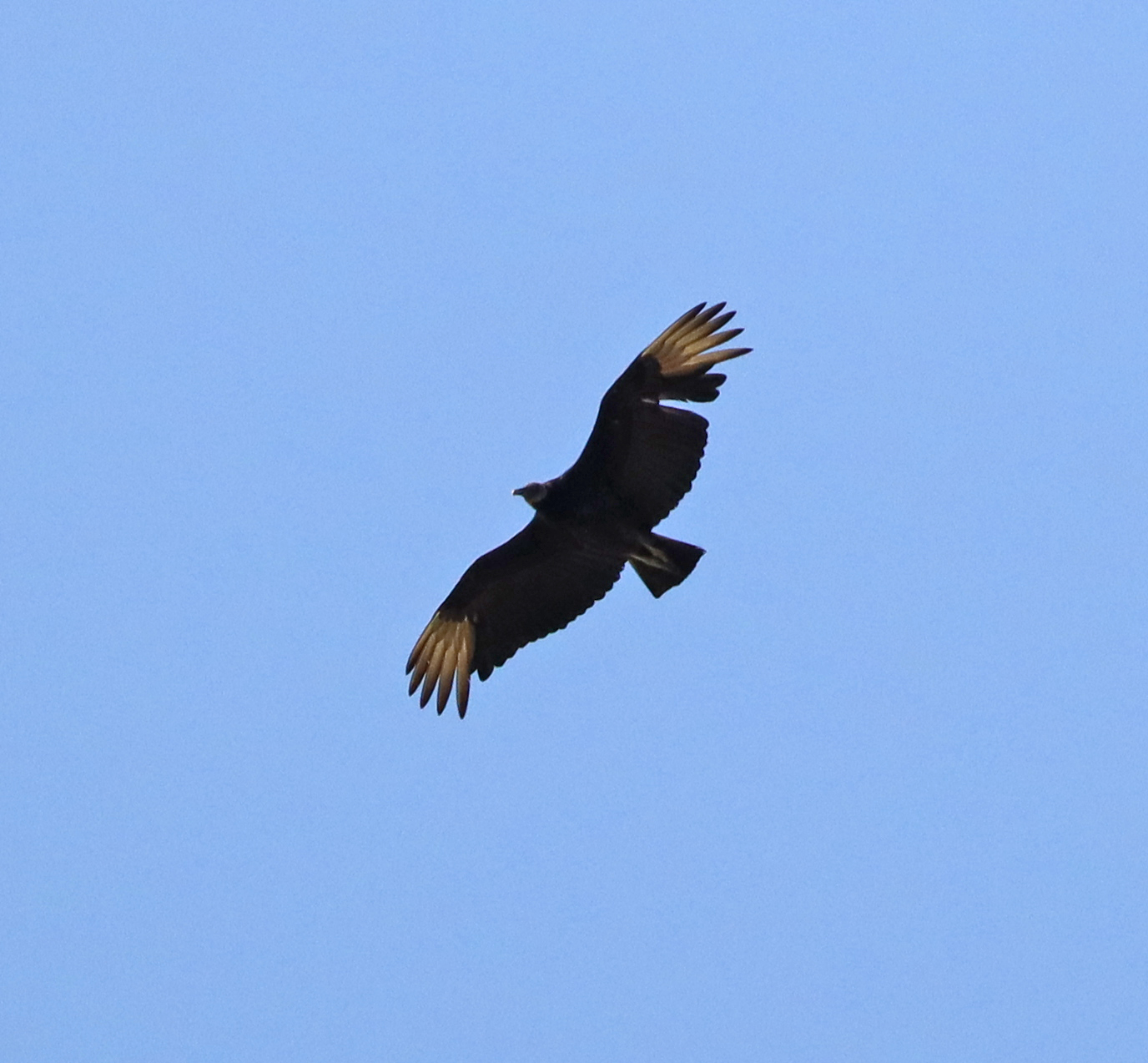
Look up over Iberville Parish and you may see a group of Black Vultures circling together on rising air. Such a group is called a kettle. Black Vultures share our skies with Turkey Vultures, and both feed mainly on carrion, helping clear away dead animals.
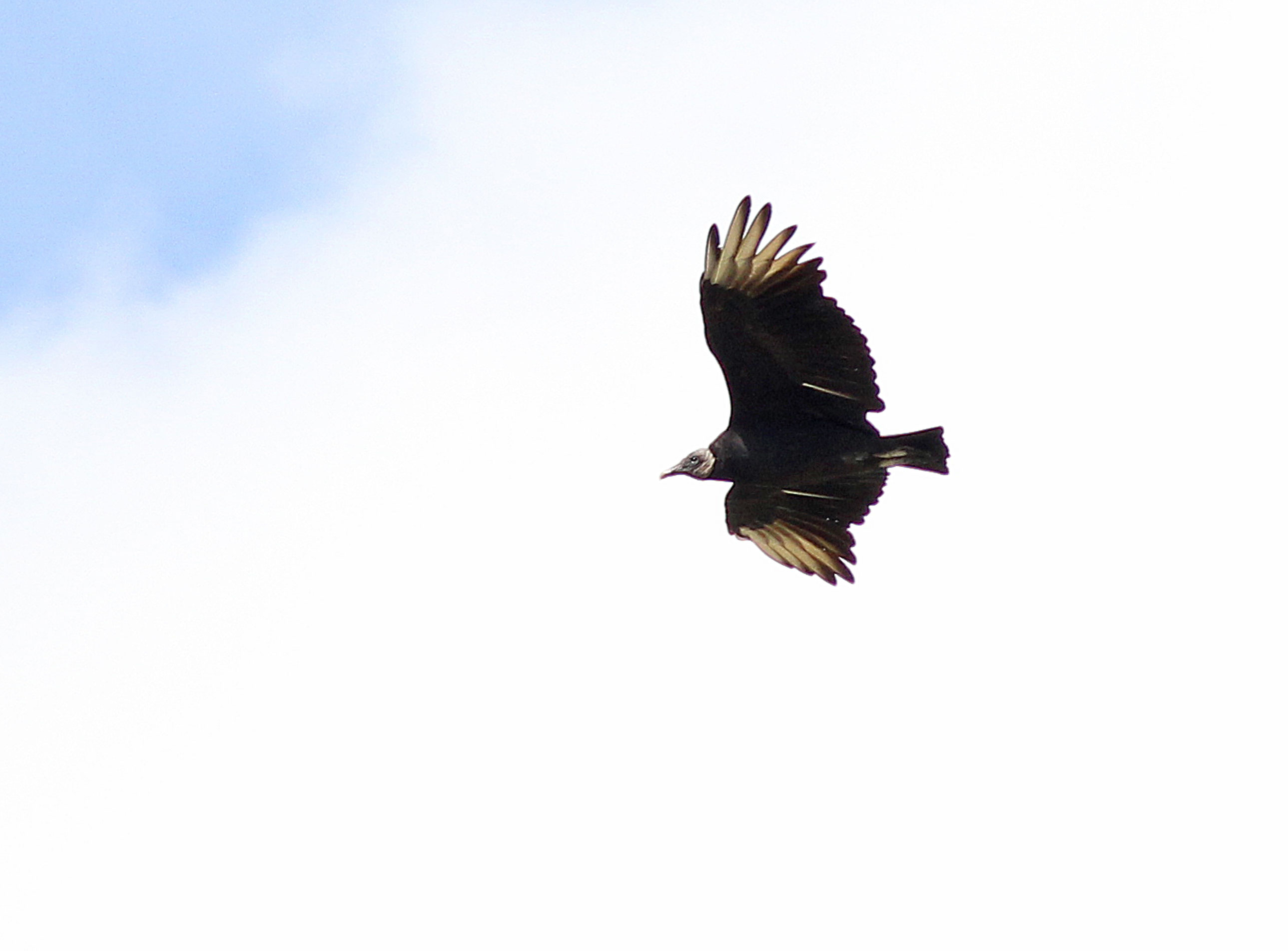
The two species are easy to tell apart once you know what to look for. A soaring Black Vulture holds its wings relatively flat. Its wings look dark except for pale patches near the tips, and its tail is short. A Turkey Vulture holds its wings in a shallow V, called a dihedral. Black Vultures rely chiefly on sight to find food; they may also follow a Turkey Vulture, whose stronger sense of smell can lead it to carrion hidden from view.
Black Vultures devote considerable time to courtship and may pair up months before laying eggs. They make little in the way of a nest, choosing a sheltered place on the ground or in a hollow log. A typical clutch has two eggs. The eggs hatch after about 38–39 days of incubation. The young are capable of flight at about 75–80 days old.
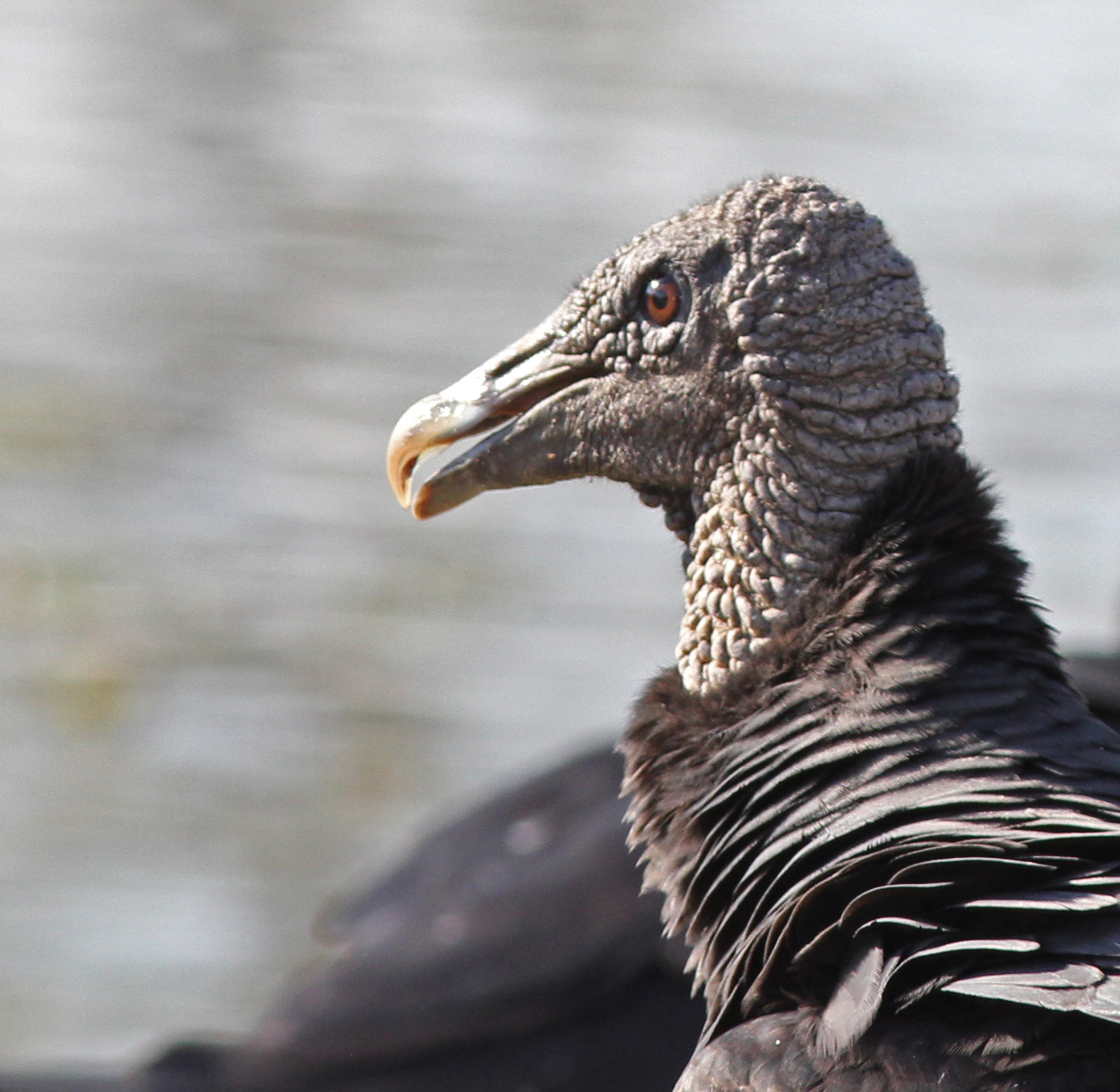
A close view of a Black Vulture's wrinkled gray head may not win everyone over. Watch one ride the wind, though, and its grace is hard to miss. By cleaning up carrion, these birds quietly perform a valuable service in the places we share.