Bird Bits
Northern Cardinals
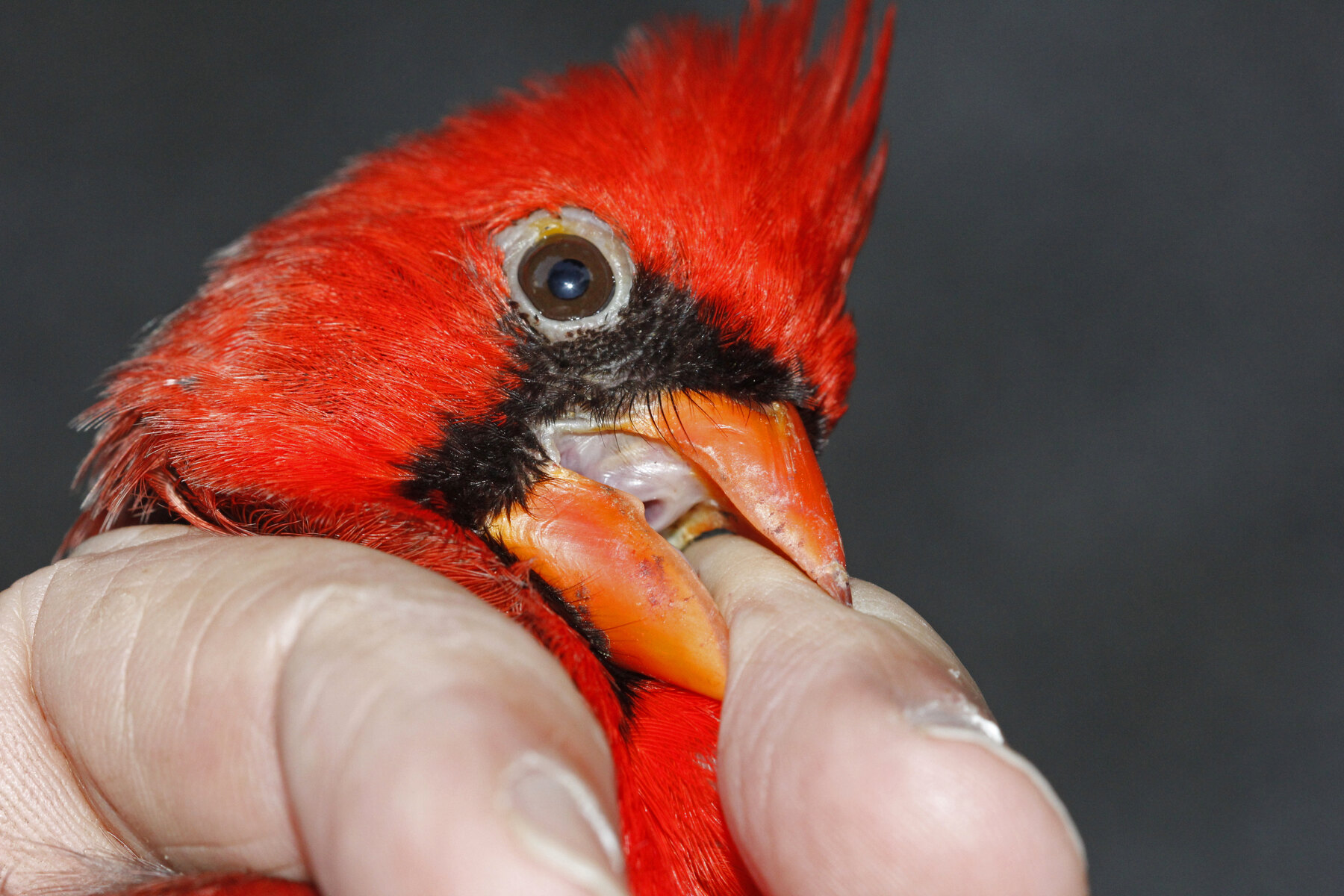
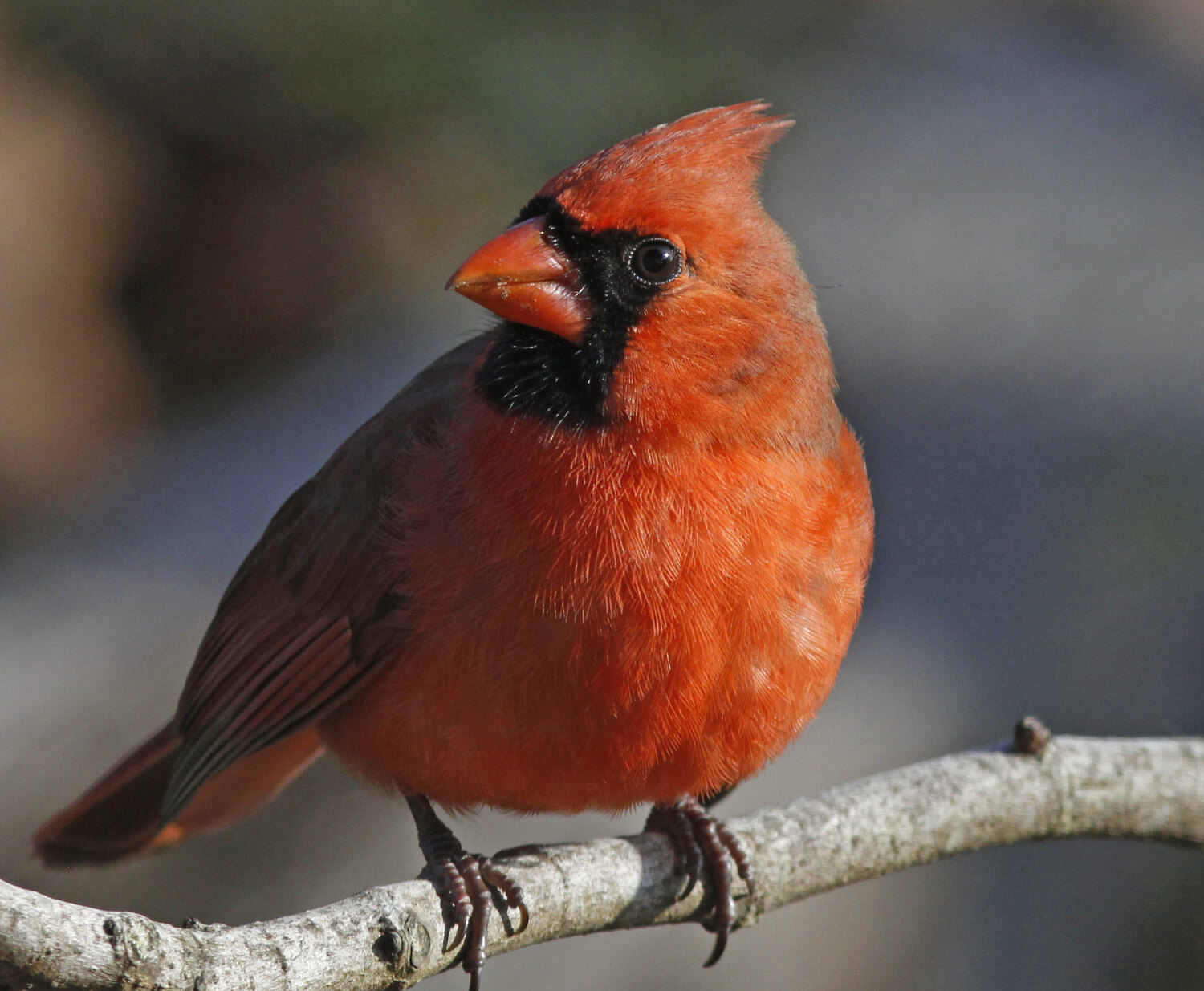
For those of us who live in the southeastern half of North America, Northern Cardinals are so common that we can almost fail to notice them. Bird with people from another part of the country, however, and an old familiar bird can suddenly look special again. Visitors from the West Coast are often thrilled to see a cardinal.
Bird walks with people from different places are good reminders that “common” depends on where you stand. We may give a cardinal only a passing glance, yet let a Black-headed Grosbeak—a western member of the same bird family—appear here and we would consider it a very big deal.
I have had the privilege, as a federally permitted bird bander, of holding hundreds of cardinals in my hands. They are even lovelier at close range than they are in the bush—provided you respect that powerful bill. A cardinal can make a memorable impression on a bander’s finger.
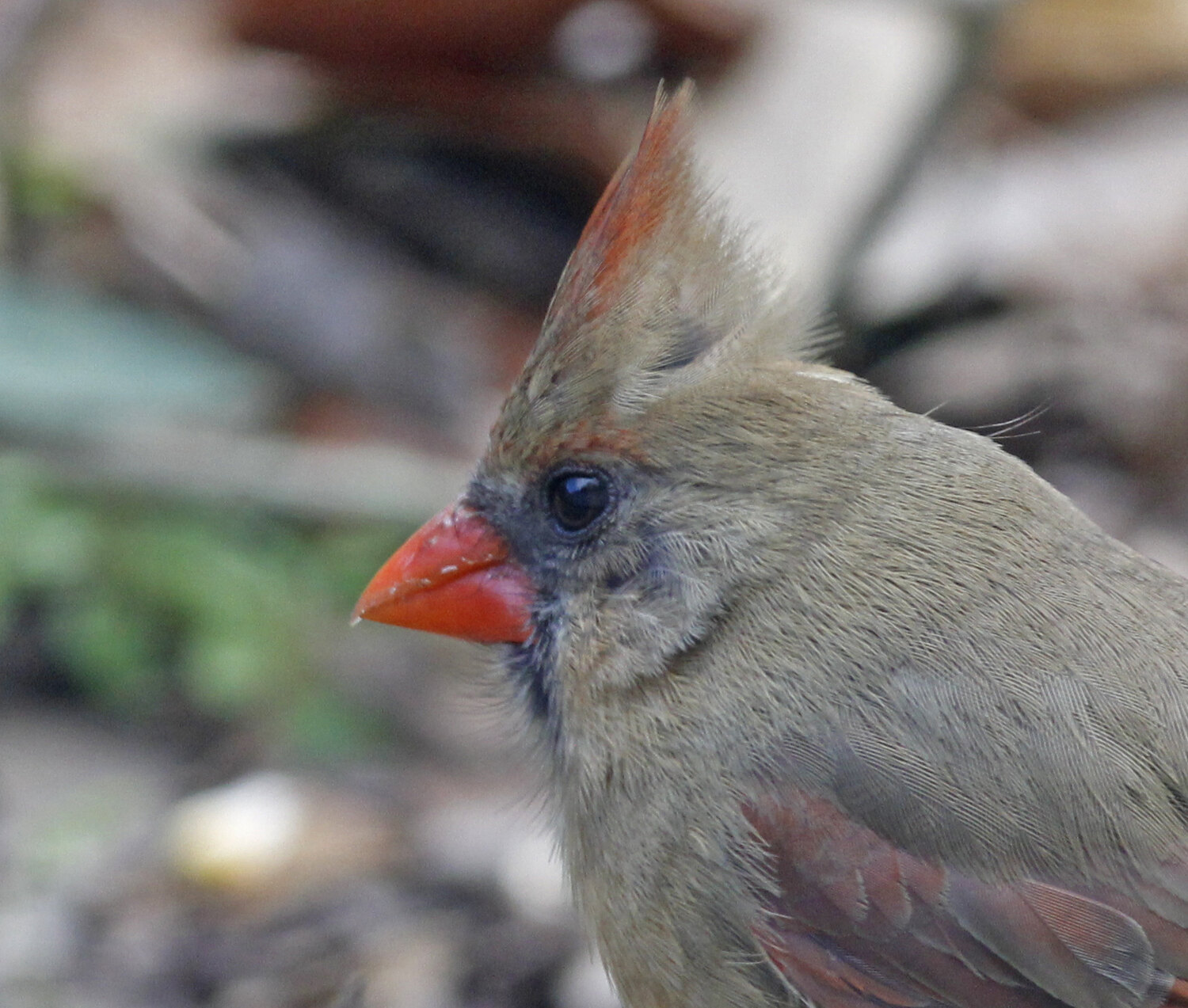
Cardinals are sexually dimorphic, meaning that males and females have distinctly different plumage. The male’s brilliant red looks made for a Christmas card, but I find the female’s subtler colors even more attractive. Look closely and you may notice the reddish feathering above her eyes—her easily overlooked “eyebrows.” Both sexes have the prominent crest, black around the bill and the heavy red-orange bill of an adult.
There is a romantic notion that cardinals always mate for life. A pair may remain together through a breeding season and sometimes longer, but mate replacement and separation are both known. Whatever the length of the partnership, raising young keeps the pair busy.
Here in south Louisiana, cardinals may begin nesting in late March or early April and continue making attempts into August. At Bluebonnet Swamp in Baton Rouge, one pair was documented making five nests in a single summer, yet successfully fledging only one brood. Nesting is a difficult business, and repeated attempts do not guarantee success.
The female selects the nest site and does most of the construction, tucking a cup of twigs, leaves, bark and grasses into dense shrubs or vines. A typical clutch contains two to five eggs. The female incubates them for about 11 to 13 days, while the male brings her food. The nestlings remain in the nest only about another week and a half before leaving as fully feathered youngsters still dependent on their parents.
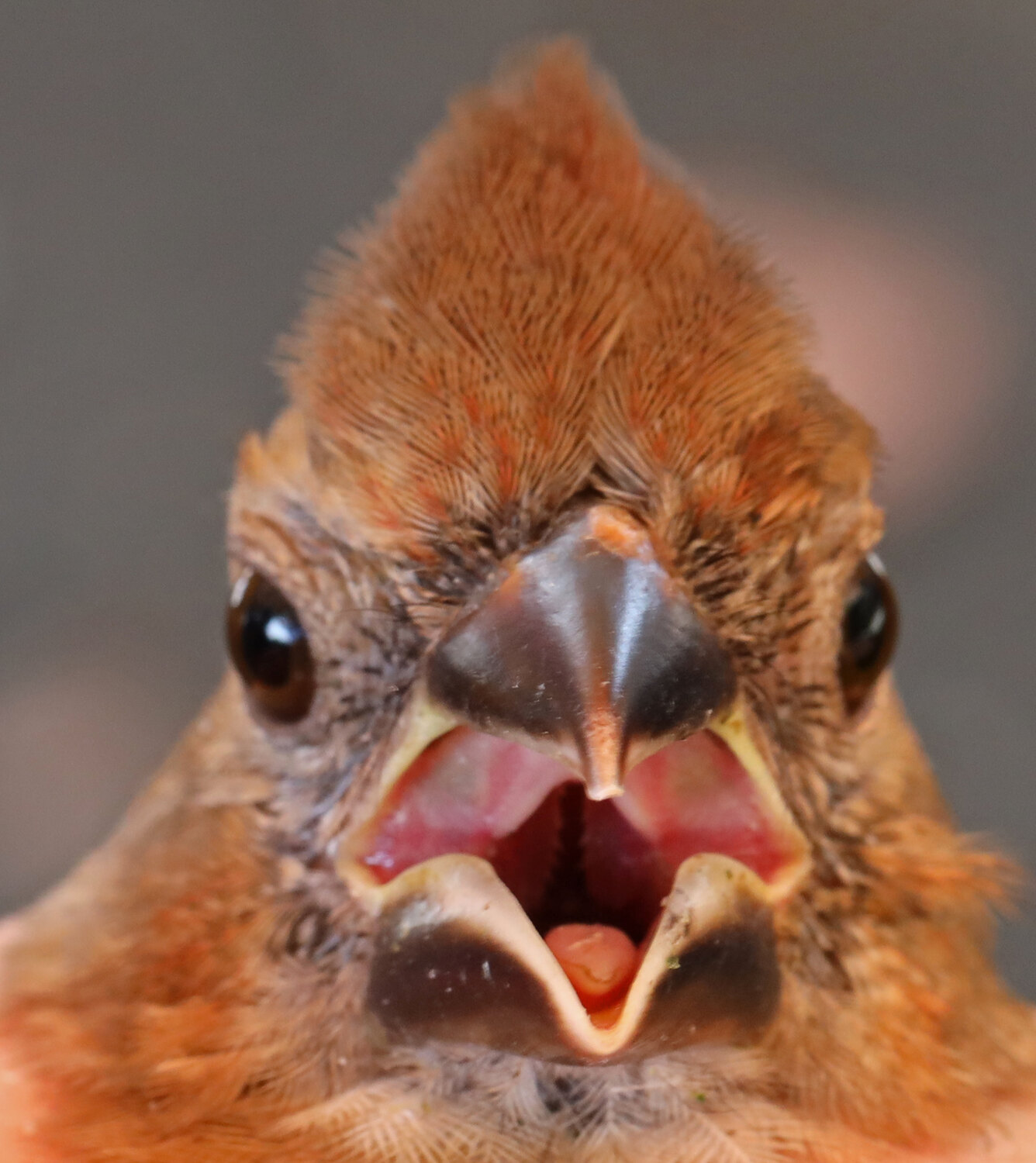
Young cardinals resemble females more than bright-red adult males, but their bills give away their age. A youngster starts life with a dark bill that gradually becomes orange or red later in the year. That great bill is built for cracking seeds and fruits once the bird is grown, but the adults feed their rapidly developing nestlings mostly protein-rich insects.
Familiar birds reward a closer look. A flash of red at the feeder may be an everyday sight in Iberville Parish, but the cardinal’s family life, the female’s song and the changing bill of a youngster make it anything but ordinary.