Bird Bits
Red-tailed Hawks
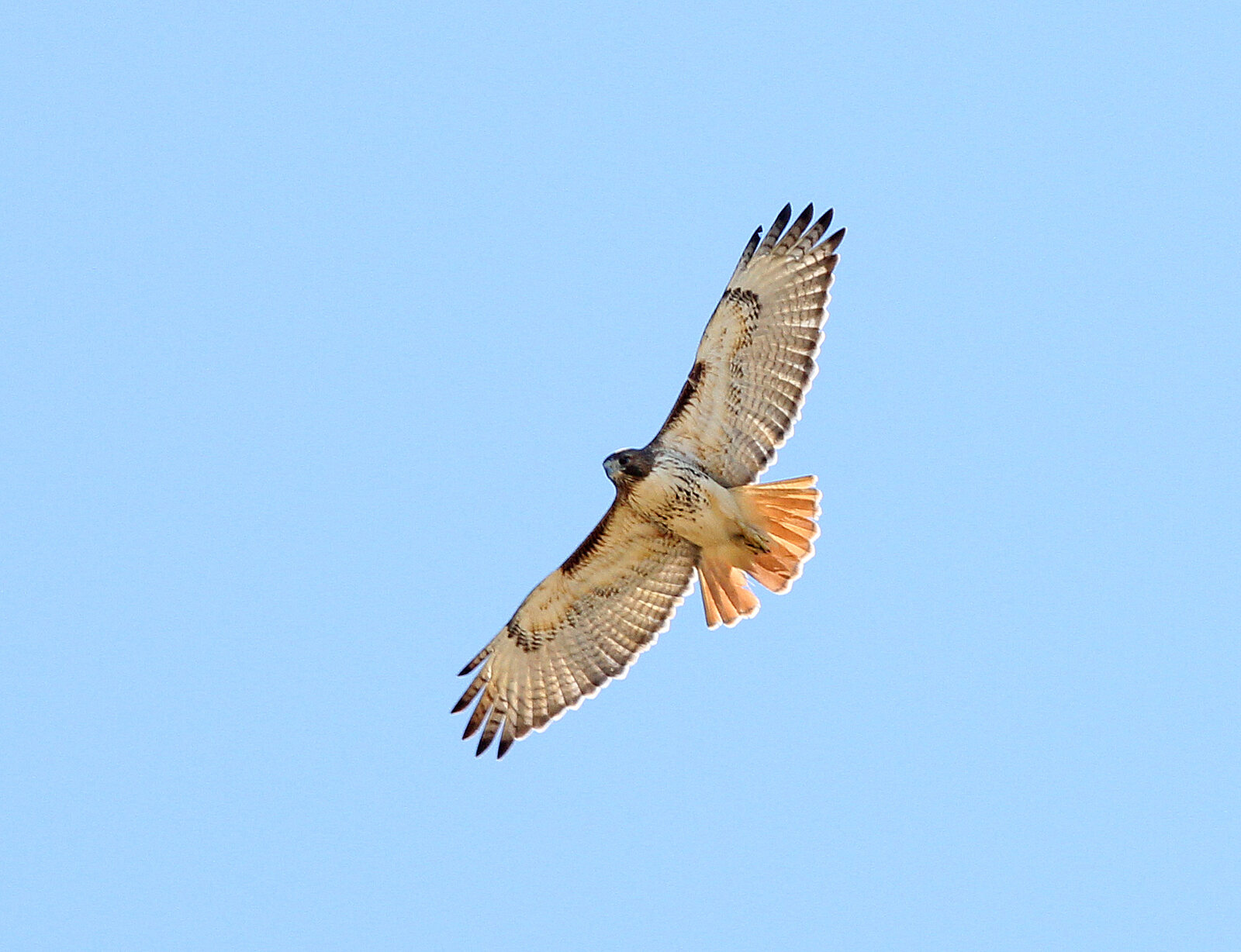
Red-tailed Hawks are among the most familiar large raptors in North America. Here in Iberville Parish, they are often seen sitting upright on utility poles, fence posts and other high perches beside open fields and roadsides. Those perches give them a commanding view of the ground below.
The old expression “eyes as sharp as a hawk” is well earned. A Red-tailed Hawk may remain motionless for long periods while watching for movement, then drop from its perch and seize prey with its talons. Small mammals make up much of its diet, especially mice, rats, rabbits and squirrels, but these adaptable hunters also take birds, snakes and other available prey.
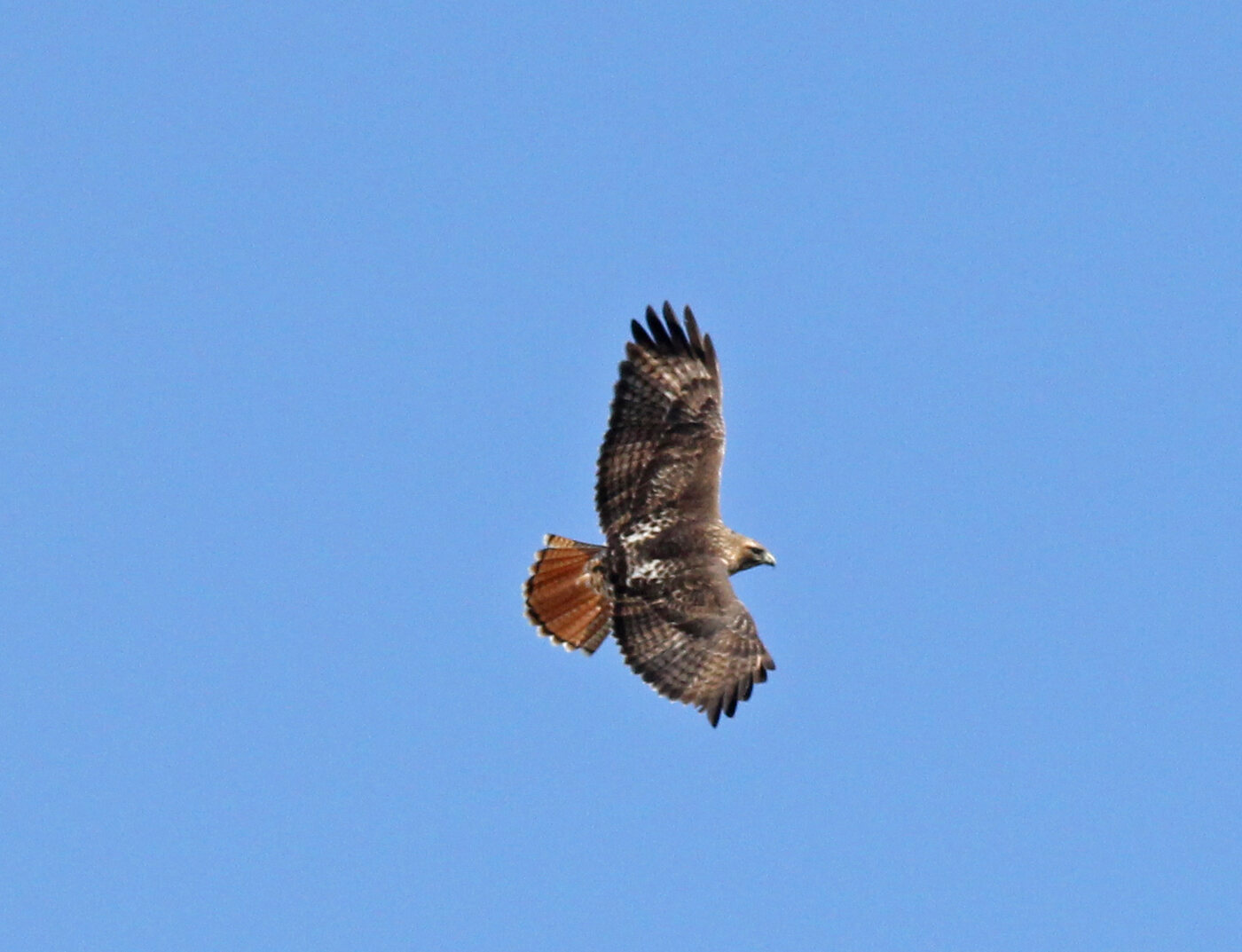
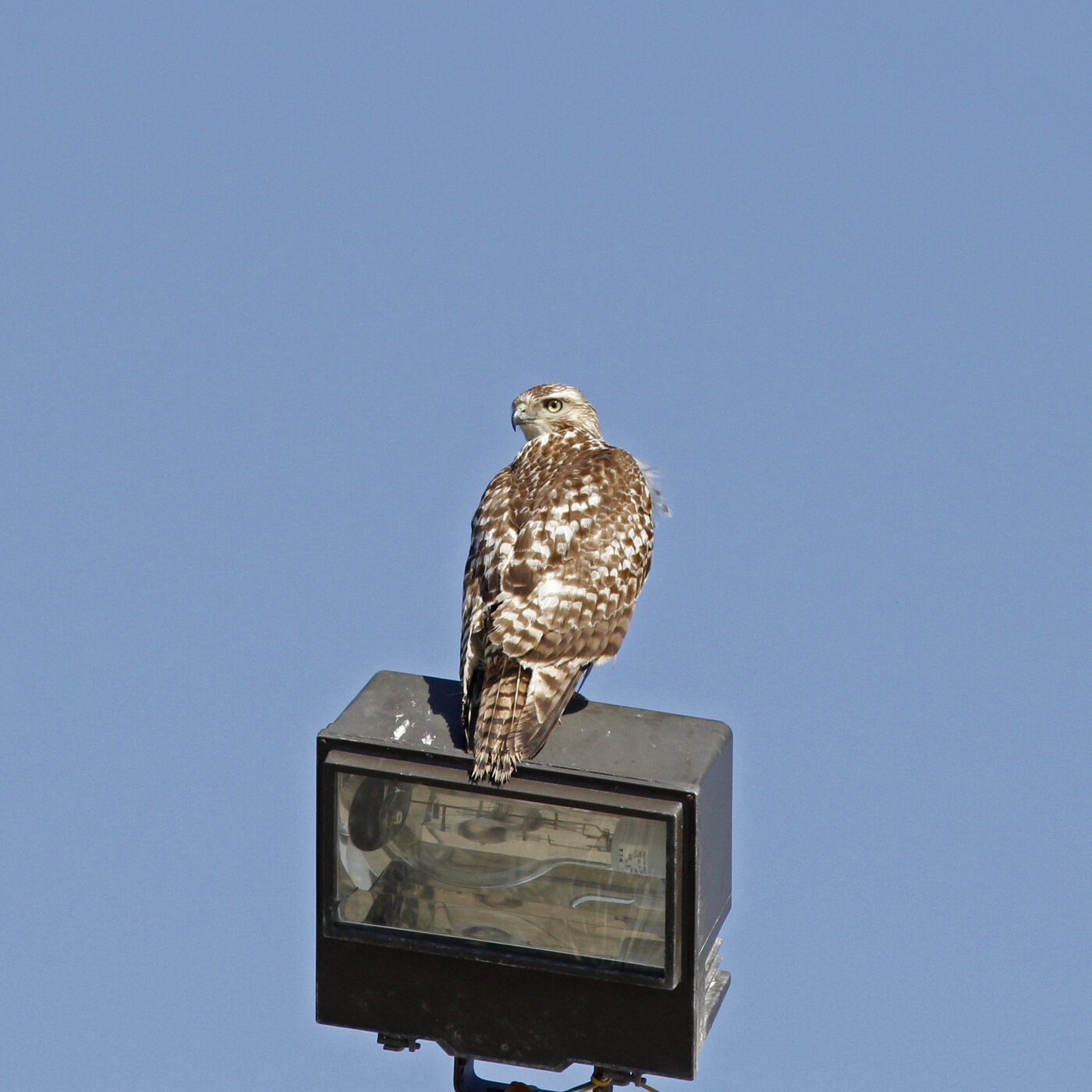
Red-tailed Hawks usually choose nest sites that combine a tall structure with nearby open hunting country. Most nests are high in trees, although the birds also use cliffs, towers and buildings. Both adults help build or refurbish the bulky stick nest. Two or three eggs are typical. Incubation lasts about 28–35 days, and the young remain in the nest for roughly another six weeks. They may leave the nest before they are strong, confident fliers and continue depending on their parents for several more weeks.
Mated pairs often remain together until one member dies. Their courtship can be spectacular, with the birds circling high overhead, calling, diving and sometimes touching or locking talons in flight. Those broad wings that look so effortless in a soaring adult belong to a powerful and agile hunter.
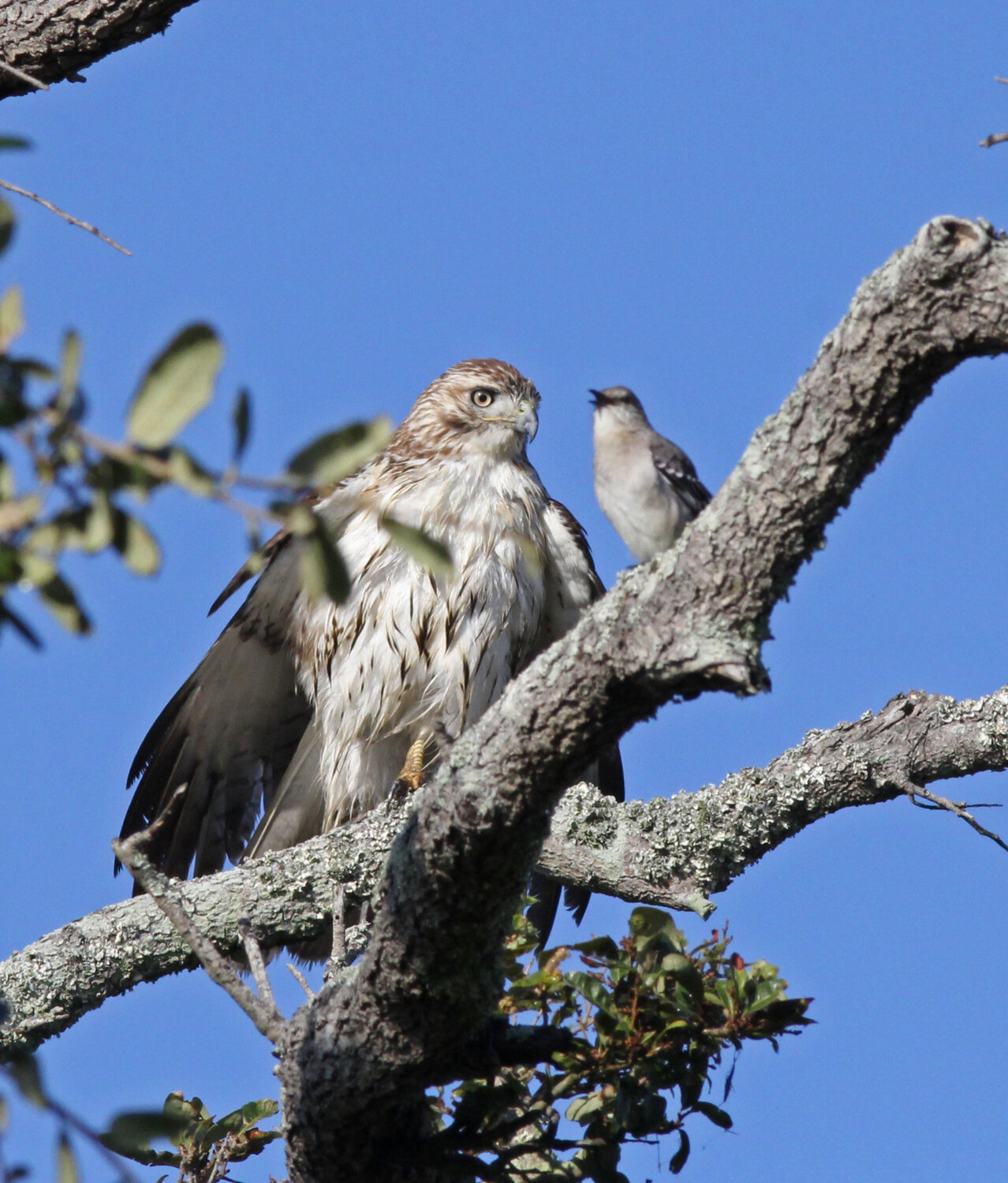
I was reminded of that power when a commotion erupted in the live oak over my house. A large raptor was crashing through the branches after what appeared to be a young squirrel, while the neighborhood Blue Jays added their alarm calls to the sudden burst of sound. The culprit was a young Red-tailed Hawk.
The tables soon turned. A Northern Mockingbird moved in close behind the hawk, calling and harassing the much larger visitor. Size matters in the bird world, but determination matters too. The young hawk may have arrived as the neighborhood predator, yet it ended the encounter looking very much like the bird being shown the door.