Bird Bits
Turkey Vultures
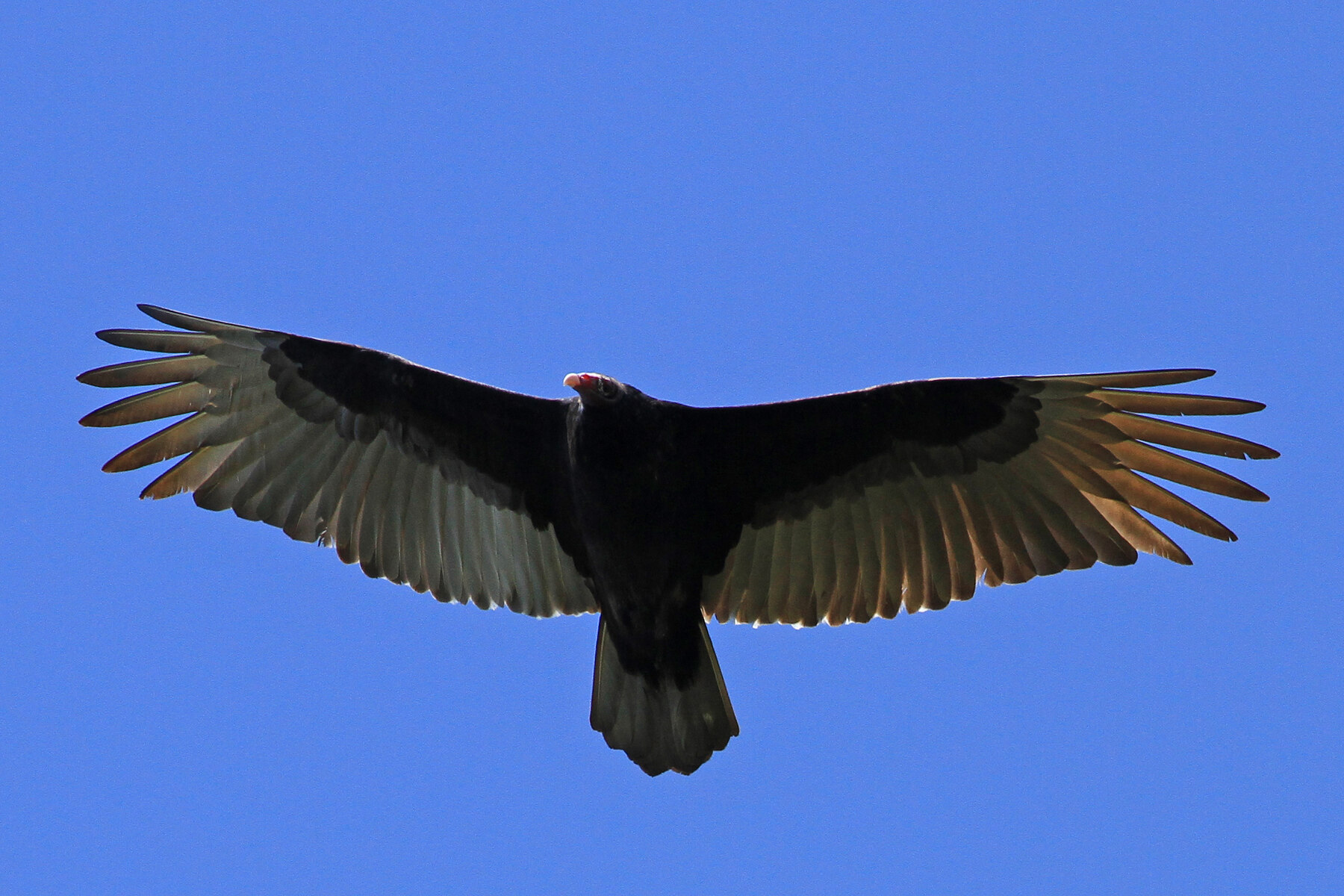
Turkey Vultures are large birds that perform an important service for both people and the environment. Along with their relatives, Black Vultures, they dispose of roadkill and other dead animals before decay and disease can spread. Both species are common in our area, and both breed in Iberville Parish. Their numbers increase during winter as birds from farther north move south in search of milder weather and dependable food.
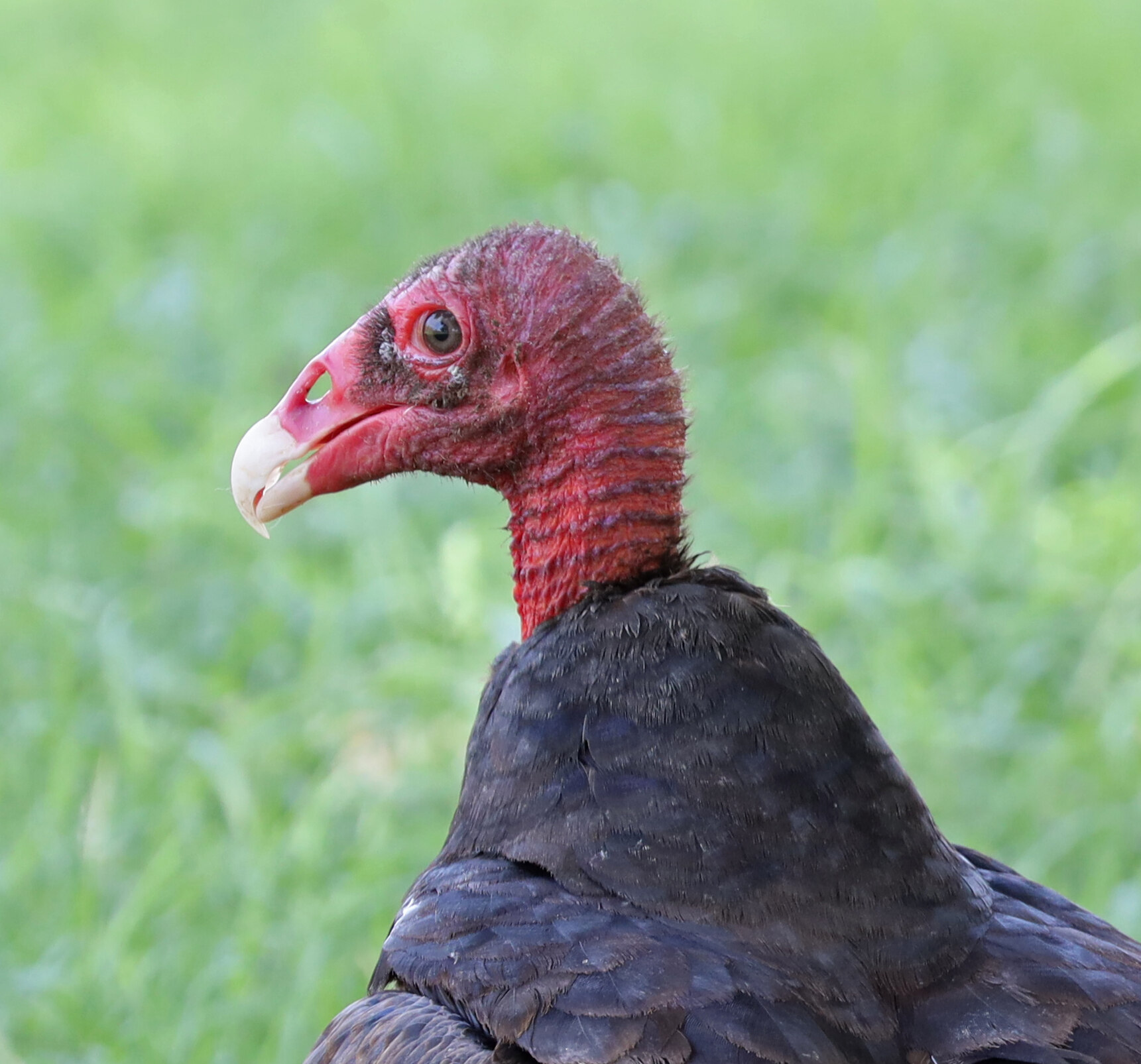
A Turkey Vulture's most remarkable tool is its sense of smell. It can detect the gases released during the early stages of decay while flying over forests or other places where a carcass may be hidden from view. Black Vultures rely more heavily on eyesight and often watch or follow Turkey Vultures to food. The arrangement works well for the Black Vultures, although the larger and more aggressive flock may not always be welcomed by the Turkey Vulture that located the meal.
Turkey Vultures usually remain with the same mate for many years. They do not build a conventional nest. Instead, they lay their eggs in a hollow tree, an abandoned building, a cave-like shelter, or on the ground beneath dense cover. Two eggs are typical. Both parents incubate them for roughly five weeks and feed the young by regurgitation. The chicks generally remain at the nest for about ten weeks before they are ready to fly.
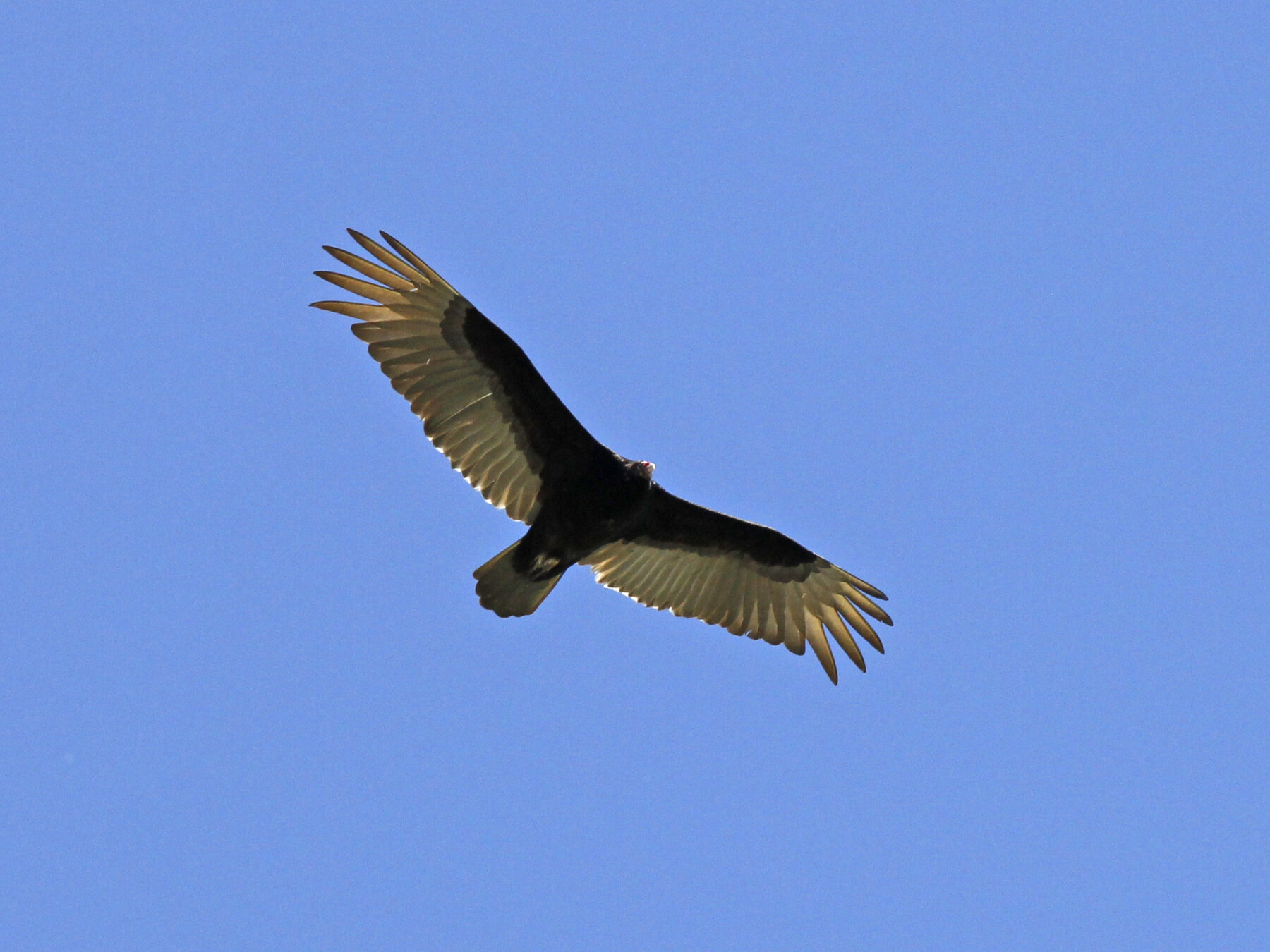
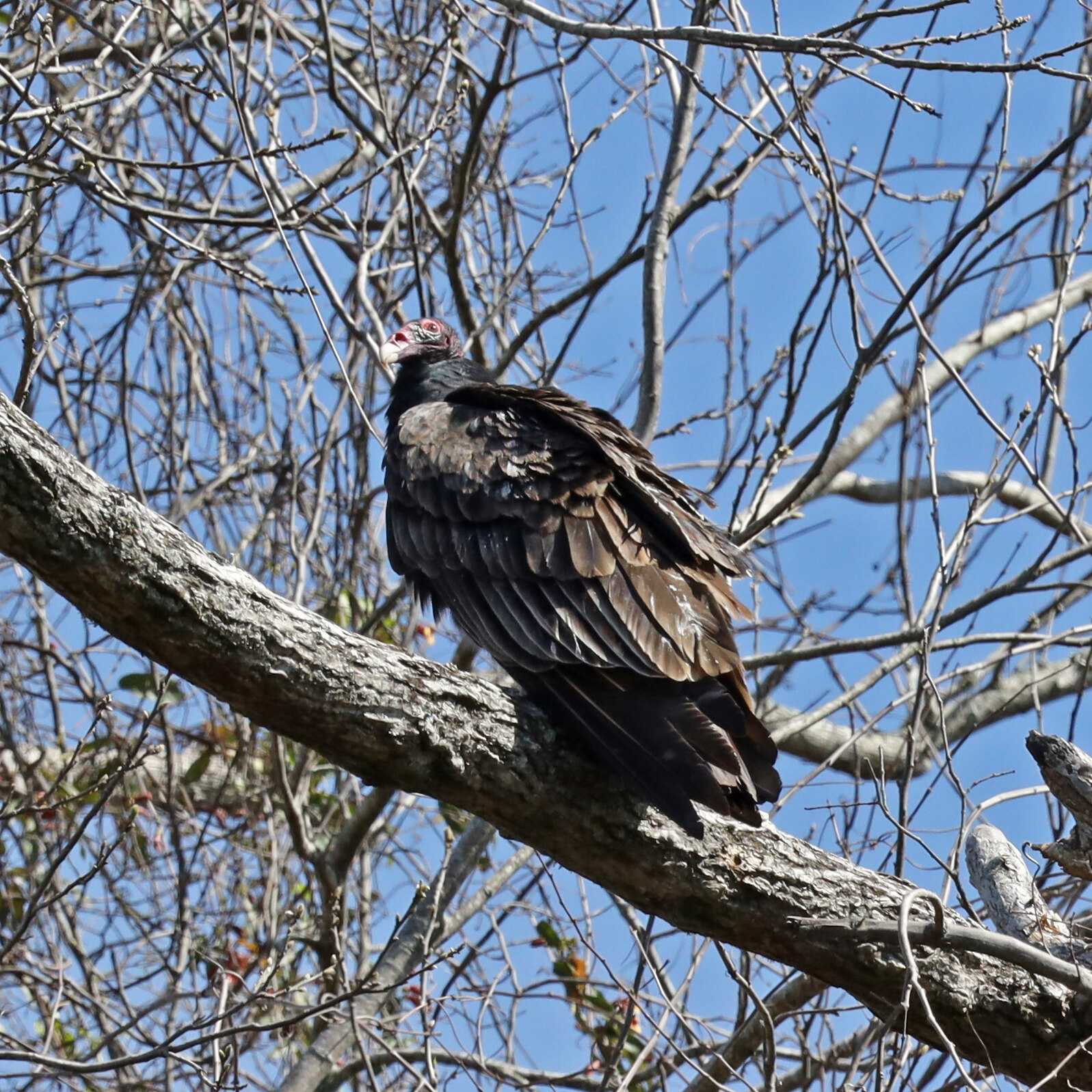
Often called buzzards, Turkey Vultures seem to float as they circle on rising columns of warm air called thermals. Their wingspan approaches six feet, yet they can remain aloft for long periods with very little flapping. A circling group of vultures is called a kettle. Once the birds gain enough altitude, they stream away in a long glide until they reach another thermal and begin climbing again. This energy-saving flight allows them to search enormous areas for food.
Their sensitive noses have even helped people find natural-gas leaks. Natural gas is odorless, so companies add a strong-smelling chemical called ethyl mercaptan to make leaks detectable. The odor resembles one of the compounds released by decaying flesh and can attract Turkey Vultures. Pipeline crews have used gatherings of vultures as clues when searching for leaks in remote country.
Turkey Vultures may not be everyone's idea of an attractive bird, but beauty is not their job. They are graceful flyers, devoted parents, and remarkably efficient members of nature's cleanup crew. The next time a kettle circles over Iberville Parish, it is worth looking up and appreciating how much work those birds accomplish without making a sound.